
The post Barvin Enters Austin Market appeared first on Barvin.
]]>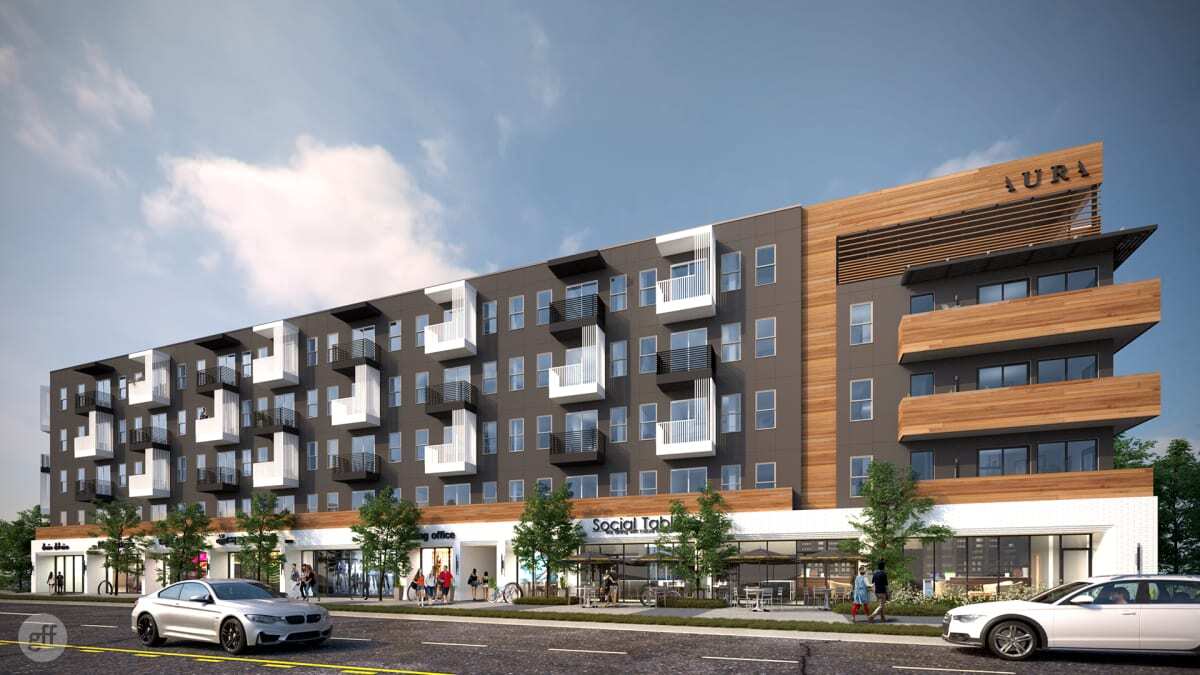
Austin, Texas – Barvin, a vertically integrated, Houston-based real estate company, recently closed on the purchase of Aura on Lamar. The five-story, Class A+ multifamily property includes 279 units and is located within North Central Austin.
Following an active year of Class A acquisitions (~ 1,300 units) and Class C dispositions (~ 900 units), Barvin currently owns ~ 4,700 units across Texas and Georgia. It operates in five markets: Houston, Dallas/Fort Worth, San Antonio, Austin, and Atlanta and is actively seeking investments in these markets and select expansion markets. Barvin has more than $850 million in assets under management in its retained portfolio. To date, it has invested more than $300 million in equity.
Aura Lamar features impeccable design and construction, premium finishes, and an unrivaled amenity package that elevates it to the top of the dynamic North Central Austin submarket. It is positioned near multiple major thoroughfares including Lamar Blvd, Interstate 35, and Mopac (Loop1), which allows for quick access to employment hubs and surrounding neighborhoods.
“We are thrilled to announce our entrance into the Austin market through the acquisition of Aura on Lamar. The property is uniquely positioned six miles from the Domain and five miles from Downtown," said Eric Barvin, President and CEO of Barvin. “The leasing velocity has been incredible, and our team is focused on providing an exceptional experience for residents, acting as a thoughtful steward of the community, and balancing immediate cash returns with long-term appreciation for our investors."
Developed in 2021 by Trinsic Residential, Aura Lamar’s impeccable attention to detail, combined with its excellent location, have attracted a superior demographic to the property. Units feature 10-foot ceilings, wrapped-corner balconies, custom kitchen islands, energy-efficient GE stainless steel appliances, double vanities, granite countertops with under-mount sinks, and walk-in showers. Community features include an athletic center with cardio and spin rooms, a resort-style swimming pool with a tanning ledge and fire pit, a business lounge with a large conference center, package lockers with 24/7 availability, a private clubroom with ping pong and service kitchen, a pet-friendly park and spa, and a sky-lounge that includes a kitchen, billiards table, and outdoor deck.
The strategic location of Aura Lamar allows residents to experience restaurants and entertainment in The Domain, The Triangle, and Downtown, some of most dynamic areas in the city. The location also provides convenient access to Austin’s major employers throughout the city, including those in the booming tech industry.
There’s no denying the boomtown-status of Austin or its continued growth potential over the next few years. It is the fastest growing major metro by demographics (Census) and was ranked second in STEM job growth for economics (RCLCO STEMdex). For the second year in a row, the city has been named the Best Tech City in the United States by CompTIA and it is home to 5,500 startups and tech companies, making it a favorable alternative to the Bay Area and New York City for companies that are looking to grow.
Over the last two years, more than 100 tech companies have relocated to Austin, creating an additional 5,000 jobs in the area and many notable tech companies (Google, Facebook, Atlassian, Tesla, Amazon, and Oracle) already call Austin home. Apple’s North Austin campus has the potential to add another 15,000 workers to its existing local headcount of 7,000, while Amazon plans to add 2,000 corporate and tech jobs. Additionally, Meta Platforms Inc. leased the entire commercial half of a 66-story high-rise building in downtown, while Tesla completed its 4.28M SF electric vehicle plant.
The post Barvin Enters Austin Market appeared first on Barvin.
]]>The post Barvin Expands Class A Strategy in Houston Market appeared first on Barvin.
]]>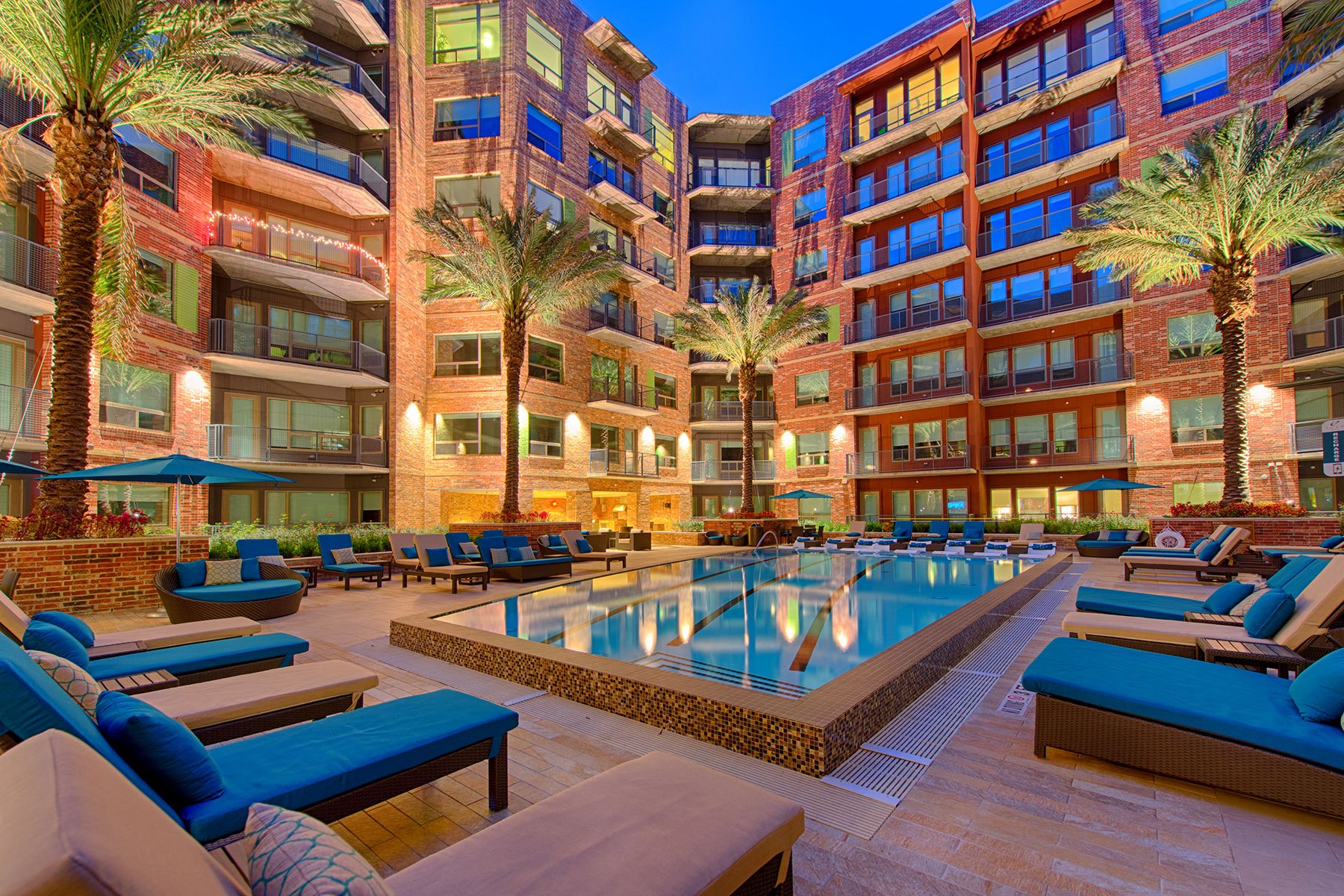
Barvin, a vertically integrated Houston-based real estate company, recently closed on the purchase of Elan Heights. The 10-story, Class A+ multifamily property includes 326 units and is located within the historic Heights neighborhood, one of Houston’s most desirable places to live.
Following an active year of Class A acquisitions (~ 1,300 units) and Class C dispositions (~ 900 units), Barvin currently owns ~ 4,700 units across Texas and Georgia. It operates in five markets: Houston, Dallas/Fort Worth, San Antonio, Austin, and Atlanta and is actively seeking investments in these markets and select expansion markets. Barvin has more than $850 million in assets under management in its retained portfolio. To date, it has invested more than $300 million in equity.
Developed in 2016 by Greystar, the Type I steel and concrete property distinguishes itself from its competitors with its posh and modern blend of amenities and interior finishes. The amenity set is highlighted by the on-site fitness studio, yoga and spin studio, upscale game room, private conference room, and expansive skyline lounge with amazing views of Downtown. Additionally, interior finishes include 10-foot ceilings, stainless steel appliances, quartz countertops, engineered wood flooring, custom glass-front cabinetry, frameless showers with bench seating, wine chillers, nest thermostats, and saflok electronic locks.
“We are excited to acquire Elan Heights, which is located in one the most sought-after and colorful neighborhoods in Houston," said Eric Barvin, President and CEO of Barvin. “The uniquely positioned property is located in proximity to both greenspace and major highway systems. We believe it is a tremendous opportunity and are thrilled to reenter our hometown market after our last Houston acquisition in 2018.”
The property is near many of Houston’s major employment centers including the Central Business District, Uptown/Galleria, Greenway Plaza, and the Texas Medical Center. In addition, the property sits adjacent to Stude Park and is within walking distance to the Heights Hike and Bike Trail and White Oak Bayou Trail. The area was touted as a “destination for foodies, architecture buffs, and creative types,” by the National Geographic Traveler and is a truly unified neighborhood living experience in an urban setting.
The post Barvin Expands Class A Strategy in Houston Market appeared first on Barvin.
]]>The post Barvin Closes on the Purchase of Elan Crockett Row appeared first on Barvin.
]]>Fort Worth, Texas – Barvin, a Houston-based multifamily investment firm, recently closed on the purchase of Elan Crockett Row. The luxury multifamily property located at the intersection of Crockett Street and Norwood Street consists of 380 units with 7,200 SF of fully leased retail including Salsa Limon and F45 Training. Barvin also owns Vance at Bishop Union and Los Altos Trinity Green in the Dallas/Fort Worth area.
Elan Crockett Row is in the booming West 7th District, which is known for its pedestrian-oriented nature and accessibility to high-end restaurants and retail. The property is directly adjacent to the Modern Art Museum of Fort Worth.
"The acquisition of this desirable DFW community is aligned with our strategic repositioning toward Class A assets in growing markets with favorable demographics and economics. There is an immediate cash flow upside to this property, as the elimination of concessions equated to a 9% increase in total revenue at the time of close. With an attractive mix of growth and stability of cash flow, we look forward to optimizing the strong rent growth runway at the property."
Built in 2019 by Greystar, the property’s dramatic design makes a striking first impression – a naturally relaxed ethos with an earthy modern charm. The units feature top-of-the-line finishes including granite countertops, designer cabinets, elite appliances and wine refrigerators, Honeywell smart thermostats, and built-in closet organizers. Residents also have access to an elevated private pet park, a boutique pool with outdoor lounges, a covered grilling area with an outdoor fireplace and TV, a sculpture courtyard overlooking The Modern Art Museum, and a hammock garden with a fire pit and outdoor pavilion.
Barvin plans to implement AI Revenue Management to optimize rent at the well-located, quality property.
The post Barvin Closes on the Purchase of Elan Crockett Row appeared first on Barvin.
]]>The post 6 Things to Look For in Any Multi-Family Investment appeared first on Barvin.
]]>Interested in expanding your investment portfolio with multifamily projects? Read on for 6 things to look for when considering multifamily investment opportunities:
- Investment Plan – What are your objectives as an investor? How long do you want to tie up your funds? Is cash flow important? If so, how consistent does it need to be? We believe that real estate is a long term investment and recognize that some investors are looking for 3-5 year deals instead of 7-10. Understand what the business plan is for the project and make sure that it aligns with your overall goals.
- Location – What are the characteristics of the location? Who are the employers? Who are your renters? What are the existing values, rents, and occupancies of other properties in the area?
- Historical Performance – This is one thing that I can’t emphasize enough. We see other sponsors’ packages and there’s no mention of current or historical performance. Everything is forward looking and there is no description of what’s been increased or decreased to make these numbers work. Be sure to ask about their year 1 assumptions on rent and expenses. Also, what are they growing these numbers at on an annual basis? If it doesn’t seem realistic, then run!
- Financing – The most important thing in any investment is to not lose your money. What leverage is the sponsor using? How much term is there on the loan? Does the interest rate adjust or stay fixed? One common mistake is investors using high leverage short term debt to enact a value add business plan. When the market turns and they’re unable to increase the rents, it makes refinancing very difficult and they will have to go back to the investors for additional capital to pay down the loan or lose the deal.
- Sponsor Track Record – As with most sponsors, I started with no track record. It’s not the only indicator but it’s definitely something to watch. How are their other properties performing? Do you notice any trends in their acquisition history? How does this new opportunity fit into the overall portfolio?
- Sponsor Co-invest – Again, not all sponsors have the ability to make a significant co-invest. That being said, compare their investment to the fees coming out of the project. Are they investing all of the acquisition fee or only a portion? I’ve always felt that my co-invest helps in our capital raises. Investors want to see their money aligned with the sponsor and that the sponsor is putting in more than they get out. I’ve always looked at our investors as partners. My net worth is strong enough to acquire a few workforce housing communities by myself, but that’s not where we see the opportunity. Instead, I’m using our network to acquire properties that we believe will increase significantly over time and provide a secure investment to all involved.
Barvin’s Approach
As in anything, there will be some winners and losers. This isn’t 2010 and the investment returns are much thinner. Throughout the past decade, we’ve focused on specific principles to keep us out of trouble and ensure that our capital is not at risk.
- Location, Location, Location – We work with a team of experts to determine key markets and target markets that exhibit growth potential. We’ve seen that there’s more value created (or destroyed) by what goes on in proximity to a property compared to what anyone can physically do to a property. That’s why we create business plans for each of our target markets and identify submarkets that we have conviction will improve over the next few years.
- Target Renter Profiles – We know our renter better than we know ourselves. Where they work, where they went to university, their family status, their income and potential for income growth or relocation. Living in Houston, we are ultra sensitive to certain industries and their outlook for the future.
- Motivated Sellers – People often ask why we transitioned out of value-add real estate. It’s largely due to a lack of motivated sellers. I could never get comfortable with the idea of paying $27M for something the other group paid $13M for. We are buying land and apartment communities from REITs, developers and institutions that prioritize ability to close over maximizing the last dollar. Just in the past 18 months, we’ve purchased 2 pieces of land from REITs and 3 apartment communities (1 from a private equity firm forced to sell and 2 from merchant builders needing to exit their deals). I’ve always held the belief that we do not want to make a seller rich, I’d much rather make our partners wealthy.
Final Thoughts
I’ve now been in the apartment business for over one third of my life. Many people spend their 20s working in various fields and then find real estate later in life, but I am fortunate to have found the business at a young age and to have spent my 20s learning through mistakes in multifamily projects. This has taught me that sponsors need to be flexible. There are times to do value-add, development or core acquisitions. My grandfather, Arthur Weisberg, told me, “When everyone goes right, go left.” This lesson has made my life so much more exciting and enriching. If you only stick to what you know, then you may end up missing something that others are seeing.
Competition has never been higher, however neither has rental demand. We expect that with the stabilization of projects and the continuation of low interest rates, values of properties will increase across all our markets, continuing to position the multifamily asset class well, and provide unique opportunities for investment.
The post 6 Things to Look For in Any Multi-Family Investment appeared first on Barvin.
]]>The post Barvin: A 10 Year Retrospective, Plus Looking Ahead to the New Decade appeared first on Barvin.
]]>In June 2009, I was laid off from my job as an analyst at Capmark and couldn’t get another job in real estate, so I decided to try my luck investing in real estate, even though I didn’t have a formal education in this space.
At exactly that time, I had a fortunate meeting with a role model who had purchased 7,000 units between 2004 and 2007. I was thinking about investing in distressed houses or small apartment complexes of 4-10 units. We discussed the difficulties in generating wealth in those property types, and the lack of cash flow in both. He was losing a large portion of his portfolio and suggested that I consider large apartment complexes.
asked about the toilets, and how I could possibly fix hundreds of toilets before I learned how to fix one. He told me that I’d never have to fix toilets if I focused on large properties, because there would be staff to manage the day to day operations. In addition, this was where the opportunity was because the loans were non-recourse. Borrows weren’t dipping too far into their pockets to save the properties.
This meeting marked a transition point in my thinking. I didn’t realize that the opportunity existed, and this advisor opened my eyes to see what I was too young and inexperienced to notice. I’ll be forever grateful to him.
Over the past 10 years, we have accomplished a lot. Here's a brief overview, or our 10 in 10:
- Grown from one employee (me) to over 50
- Acquired nearly 5,000 units
- Invested over $126 million
- Sold 791 units and returned approximately $73 million via distributions and sales
- Completed over $50 million in construction projects
- Started a construction company and a property management company
- Expanded into Dallas, San Antonio, and Atlanta
- Started on our first ground-up development
- Made many new friends and partners who’ve joined our journey
- Been tested by difficult situations and built a reputation as a best-in-class operator in our market
Looking Ahead
Going into our next decade, we are preparing for further growth and improvement. We are in the process of setting up an advisory board to help us scale into a great investor, operator, and developer of multifamily properties.
As many of you know, a big part of my role is to meet with investors. We raised over $50 million in the second half of 2019 from high net worth investors. Trust me, that didn’t happen from my couch. I traveled a ton this year and had face-to-face meetings with hundreds of people. In the process, I learned a few things that differentiate our organization from other groups. Here are a few:
- Patient and principled investment strategy. We run a lean operation that’s not reliant on deals to survive. Obviously, we want to grow and find opportunities to place capital, but the fees are not driving our decision making.
- No pressure to invest. We share deals that we have under contract and will close regardless of a single investor’s participation.
- Pick the deals you like. Unlike a fund, this isn’t a blind pool. You can invest in deal A and pass on deal B. We’ll keep you on our distribution list until you tell us to take you off.
- Large sponsor co-invest. I’m the largest (or one of the largest) investors in every deal. My typical check size ranges from $1-2 million and our average investor contributes $150,000.
- Fair return structure for investors. We can offer similar returns with a fair structure that benefits both the sponsor and the investor, because we’re cutting out the middleman (i.e. private equity firms) and raising funds directly from investors.
In 2020, we expect to sell four properties:
- Oak Lawn Heights in February 2020
- Alora, Ellis, and Redwood Gardens in Q3 2020
This will free up capital for our organization and our partners.
We will also break ground on our first development project in Q2 2020: an opportunity zone development in the Texas Medical Center. There’s still some room left if you’re interested.
By Q4 2020, we will finalize the development plans for a large mixed-use development in Houston. The timing of future acquisitions is uncertain, but we’ll be looking for opportunities.
In 2019, we underwrote over 100 apartment communities, offered on 47 deals, made best and finals on 19 and were awarded two. That’s a 2% hit rate. We are evaluating ways to improve our percentages moving forward, without sacrificing our return expectations.
All of this is made possible by our partners. Our team and I are the guides who can make partners' investments work, and we take that responsibility very seriously. I’m excited for the future and preparing for both opportunities and challenges ahead.
The post Barvin: A 10 Year Retrospective, Plus Looking Ahead to the New Decade appeared first on Barvin.
]]>The post Barvin Aquires SYNC Perimeter in Atlanta appeared first on Barvin.
]]>
Barvin has partnered with Sun Holdings Group whose SYNC Residential property management arm will provide property management services as they have a significant presence and solid track record in the Atlanta market.
“We look forward to growing our presence in the Atlanta market. Atlanta offers a strong, diverse economy for long term investment potential and helps us achieve our goal of a diversified portfolio with assets in Texas and future expansion plans throughout the southeastern and southwestern U.S.” – Eric Barvin, President and CEO of Barvin.
Barvin is a privately help real estate investment and service company founded 2009 by Eric Barvin and specializing in multifamily property. Headquartered in Houston, Barvin has purchased over 4,000 units with the goal of generating superior returns by identifying and purchasing assets that have significant upside. We take pride in acquiring and managing assets that generate positive cash flow and exceed the expectations of our investors. Please contact us via our website at www.barvin.com for investment opportunities or to present acquisition candidates.
The post Barvin Aquires SYNC Perimeter in Atlanta appeared first on Barvin.
]]>